Outdoor cornhole sounds simple. A couple of boards, a set of bags, and you’ve got instant activity. Until you don’t!
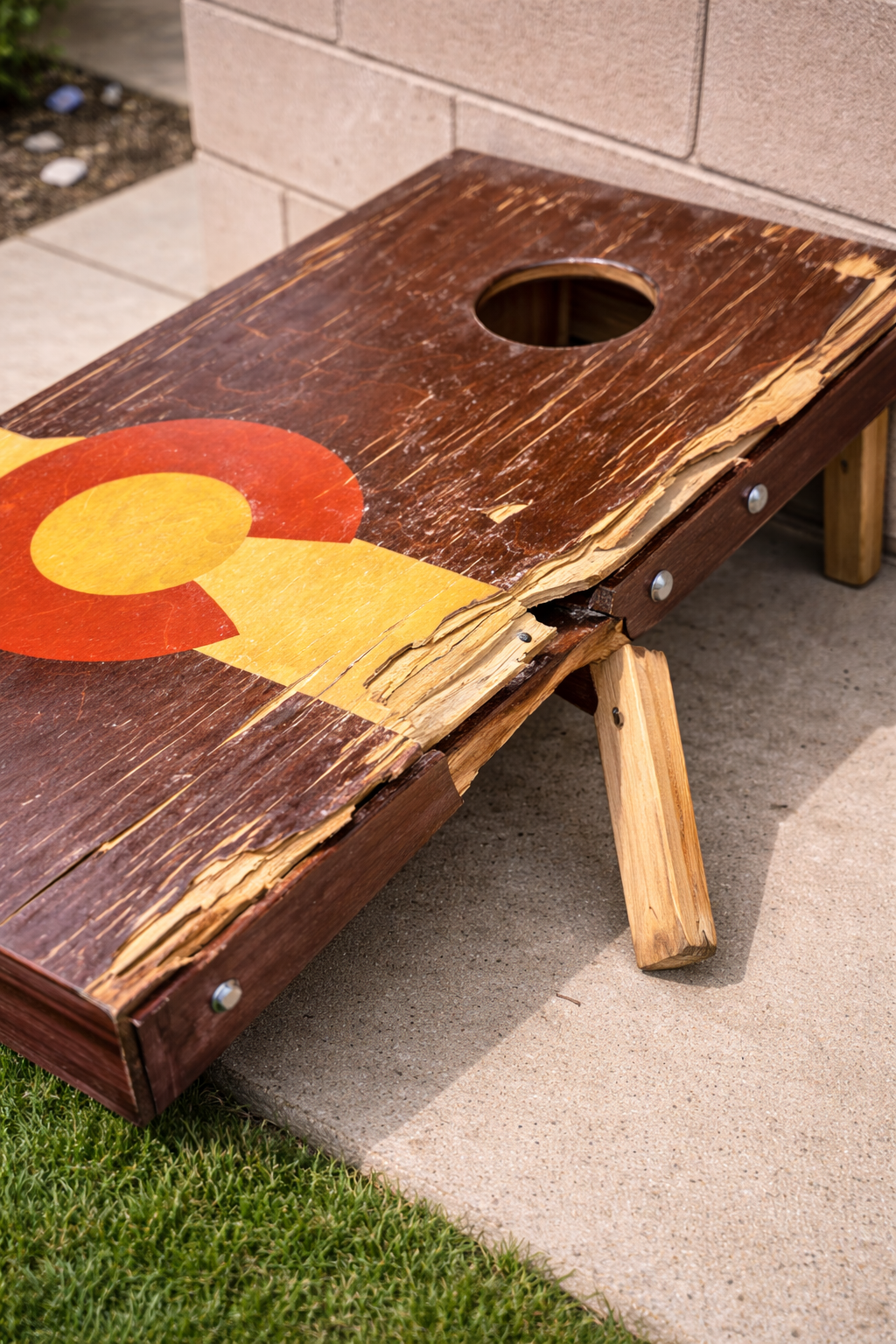
If you manage a school, park, campground, or community space, you’ve probably seen the pattern: boards show up, people love them, and then within a season or two they’re warped, peeling, stolen, or quietly removed altogether.
The problem isn’t cornhole. It’s the type of boards being used in environments they were never built for.
This is where concrete cornhole boards come in.
The Reality of High-Traffic Cornhole
Backyard cornhole and public-space cornhole are two completely different things.
In a controlled setting, wood boards can last for years. In public or semi-public environments, they face constant exposure and unpredictable use.
Think about what these boards actually deal with:
- Rain, snow, and freeze-thaw cycles
- UV exposure all summer long
- Daily use by dozens (or hundreds) of people
- People sitting, standing, or leaning on them
- No consistent storage or oversight
Even when placed on concrete pads or pavers, the environment itself is still demanding.
That’s why traditional boards fail.
Where Traditional Cornhole Boards Fall Short
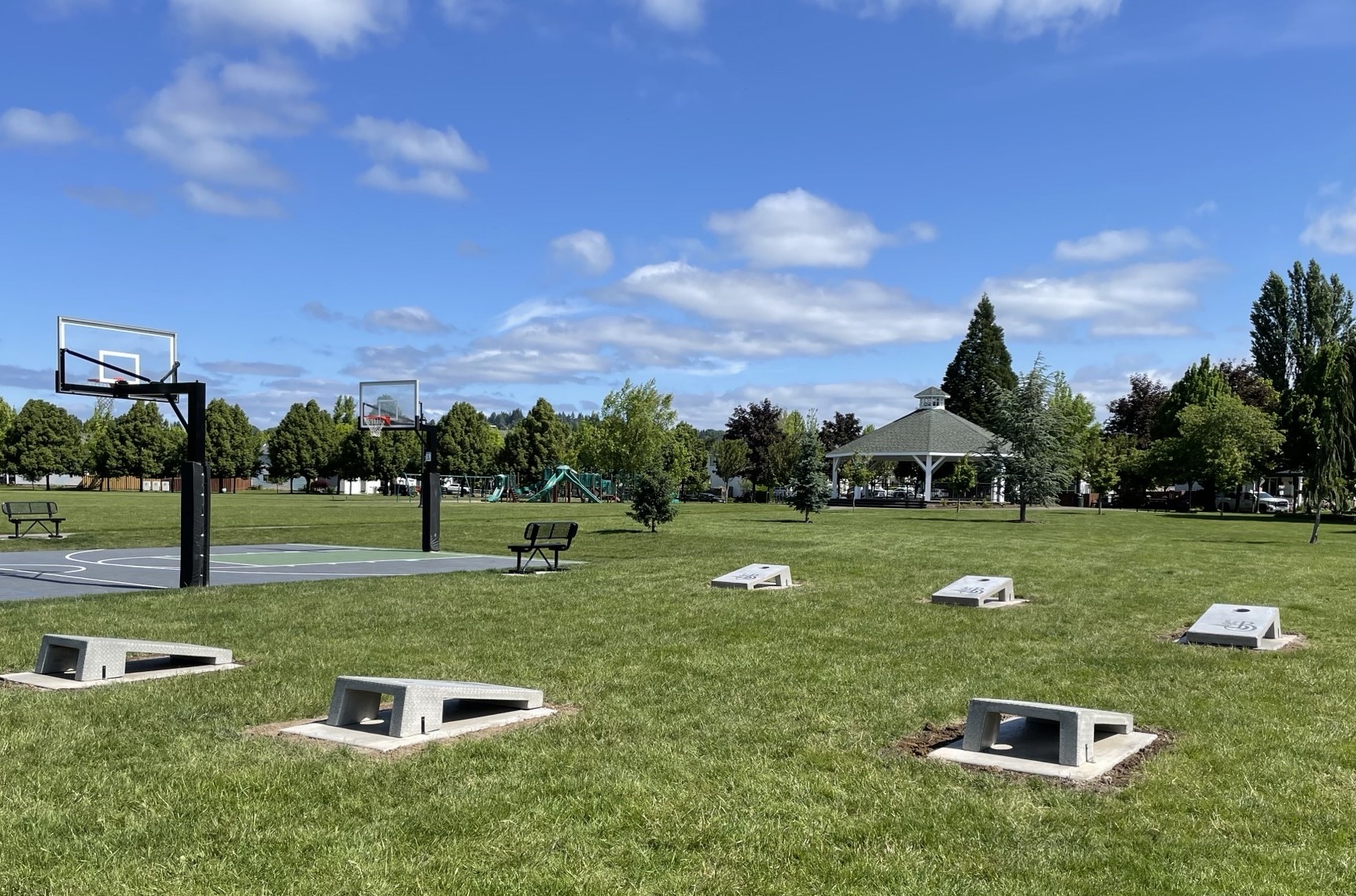
Most cornhole boards are built from plywood and paint. That works fine for weekend use. It doesn’t hold up in shared spaces.
Common issues show up quickly:
Warping and delamination
Moisture gets in. Boards swell, twist, and lose their flat playing surface.
Surface breakdown
Paint fades, chips, or peels under UV exposure and regular use.
Structural fatigue
Legs loosen, joints weaken, and boards become unstable.
Constant replacement cycles
What started as a low-cost amenity becomes a recurring expense.
For schools, parks, and campgrounds, this turns into a familiar cycle: install, repair, replace, repeat.
Why Concrete Cornhole Boards Work
Concrete cornhole boards are designed specifically for permanent outdoor installation.
Instead of trying to protect a temporary product from the elements, they embrace the environment.
1. Built for Weather
Rain and snow aren’t occasional events in many regions. They’re part of daily life.
Concrete handles:
- Freeze-thaw cycles without warping
- Moisture without swelling or delaminating
- UV exposure without surface breakdown
The playing surface stays consistent year after year.
2. Designed for Constant Use
Public spaces don’t come with instruction manuals.
People will:
- Sit on the boards
- Lean on them
- Gather around them
- Use them in ways you didn’t plan for
Concrete boards are reinforced and built to handle that reality without shifting, cracking under normal use, or degrading structurally.
3. Permanent, Not Temporary
One of the biggest advantages of permanent cornhole boards is exactly that—they stay put.
- No hauling boards in and out of storage
- No worrying about theft or loss
- No seasonal setup and teardown
Installed once, they become part of the space.
Concrete Cornhole in Schools
Schools are one of the toughest environments for outdoor amenities.
You’ve got:
- Daily, high-volume use
- Limited maintenance budgets
- Equipment that needs to last through years of students
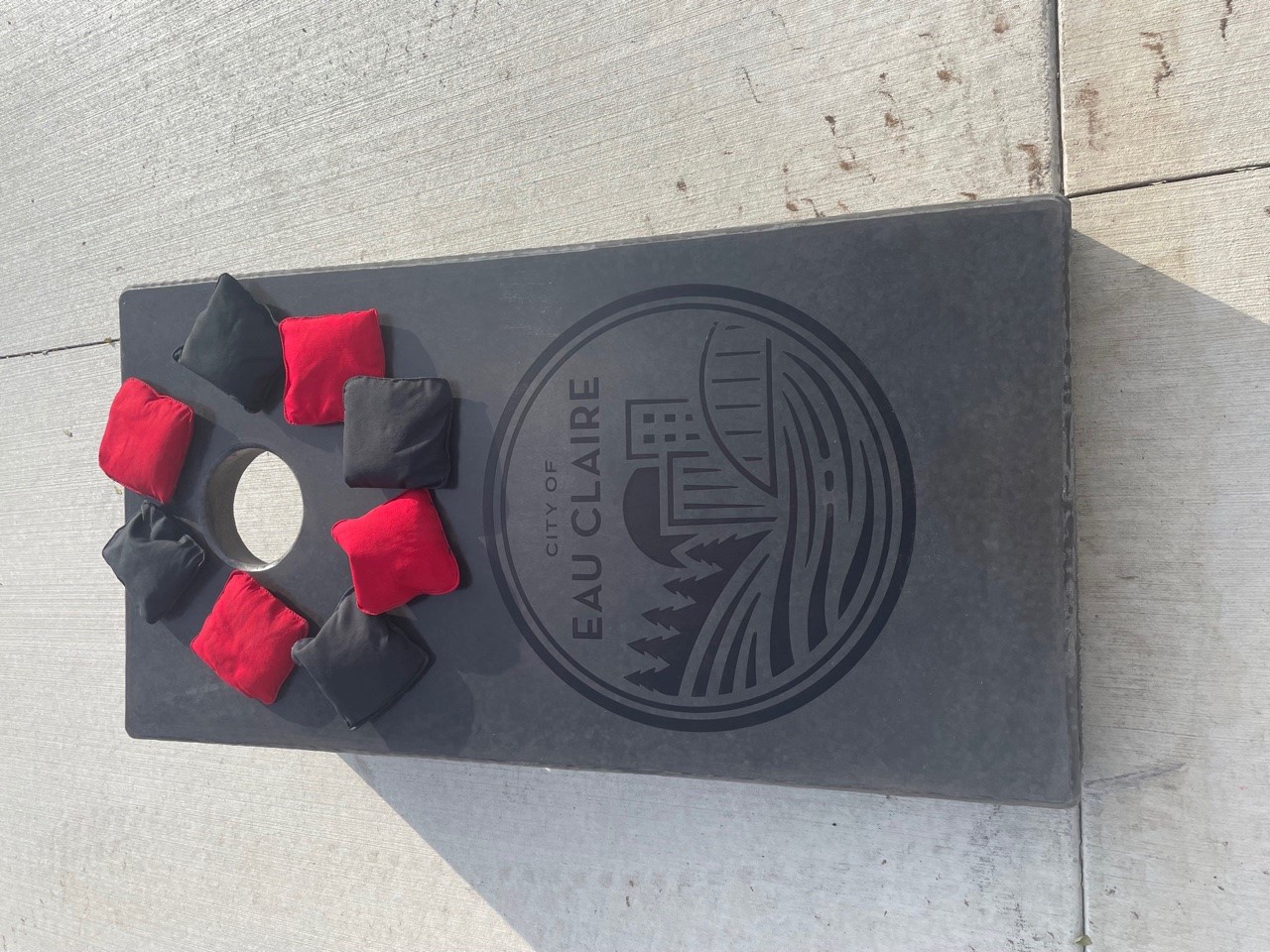
School cornhole boards made from concrete solve several problems at once.
They provide:
- A low-barrier activity students naturally gravitate toward
- Durable infrastructure that doesn’t need constant attention
- A long-term investment instead of a recurring expense
Placed near lunch areas or gathering spaces, they become part of the daily rhythm of campus life.
Concrete Cornhole in Parks
Parks are open environments. That’s what makes them great—and what makes them hard on equipment.
Park cornhole boards need to handle:
- Unsupervised use
- Weather exposure year-round
- High variability in how people interact with them
Concrete boards thrive in this setting.
They also work best when grouped with other permanent games—ping pong, chess, or foosball—creating a simple, staff-free activity hub that draws people in.
Concrete Cornhole in Campgrounds
Campgrounds are built around downtime and shared experiences.
Cornhole fits naturally into that environment—but only if it’s available and in good condition.
Portable boards often:
- Get stored away or forgotten
- Break mid-season
- Require staff to manage and maintain
Concrete installations remove that friction.
Guests arrive, see the boards, and start playing. No setup, no staff involvement, no missing pieces.
It becomes part of the experience.
A Better Approach to Outdoor Amenities
There’s a bigger idea here beyond cornhole.
A lot of outdoor amenities are treated as temporary. They’re added quickly, wear out quickly, and get replaced just as quickly.
But spaces that people return to—schools, parks, campgrounds—benefit from a different approach.
Build fewer things. Build them better. Let them last.
That’s what concrete cornhole boards represent:
- Permanent instead of temporary
- Durable instead of disposable
- Always available instead of occasionally usable
The Shift from Replacement to Longevity
Once you step back and look at the cycle of replacing traditional boards, the decision becomes clearer.
It’s not just about durability. It’s about:
- Reducing maintenance
- Eliminating recurring purchases
- Creating spaces that actually function the way they’re intended to
When cornhole boards are always there, always level, and always usable, people use them.
And that’s the point.
Final Thought
Cornhole doesn’t need to be reinvented. It just needs to be built for the environment it lives in.
For schools, parks, and campgrounds, that means choosing something that can handle real use, real weather, and real time.
Concrete cornhole boards do exactly that—quietly, consistently, and for years to come.