Pocket parks
Small urban spaces
Compact installations that create visible activity without overwhelming limited square footage.
Best fit
One ping pong table plus one to two sets of cornhole boards.
outdoor concrete games for parks and recreation give departments a permanent way to activate public space with amenities that are built for weather, vandal resistance, low upkeep, and multi-generational use. From neighborhood parks to high-traffic regional destinations, Stone Age Concrete Games helps public agencies create recreation areas that stay attractive and functional for decades. Start here, explore the broader Outdoor Game Tables by Venue hub, browse the full Outdoor Concrete Games catalog, or head back to the homepage to view the complete brand experience.
This page is built specifically for parks and recreation departments, municipal planners, landscape architects, civic improvement teams, and nonprofit park partners who need long-life public-use amenities that do more than sit there. The goal is simple: create durable recreation infrastructure that increases dwell time, strengthens community use, and avoids the replacement cycle that kills long-term value.
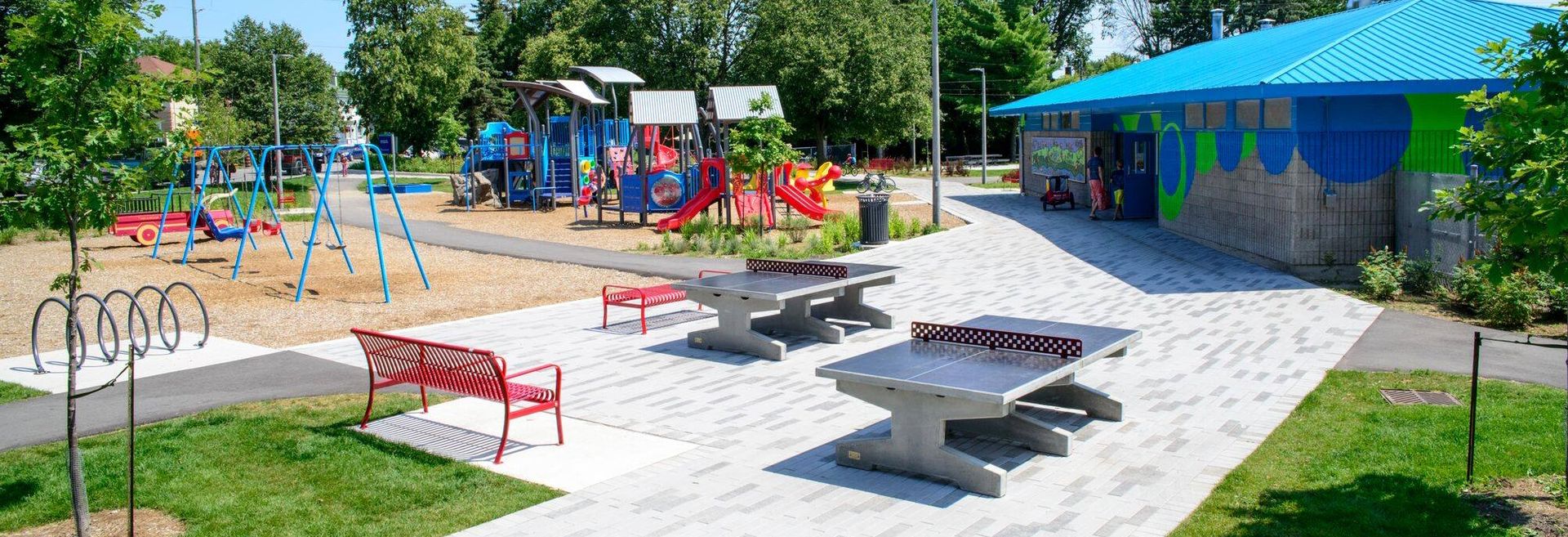
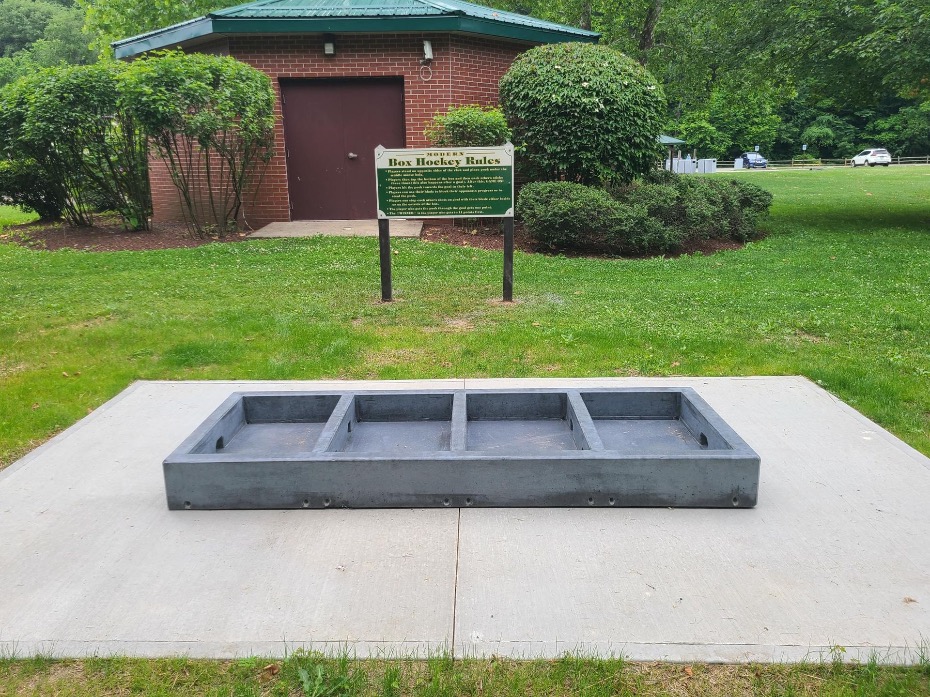
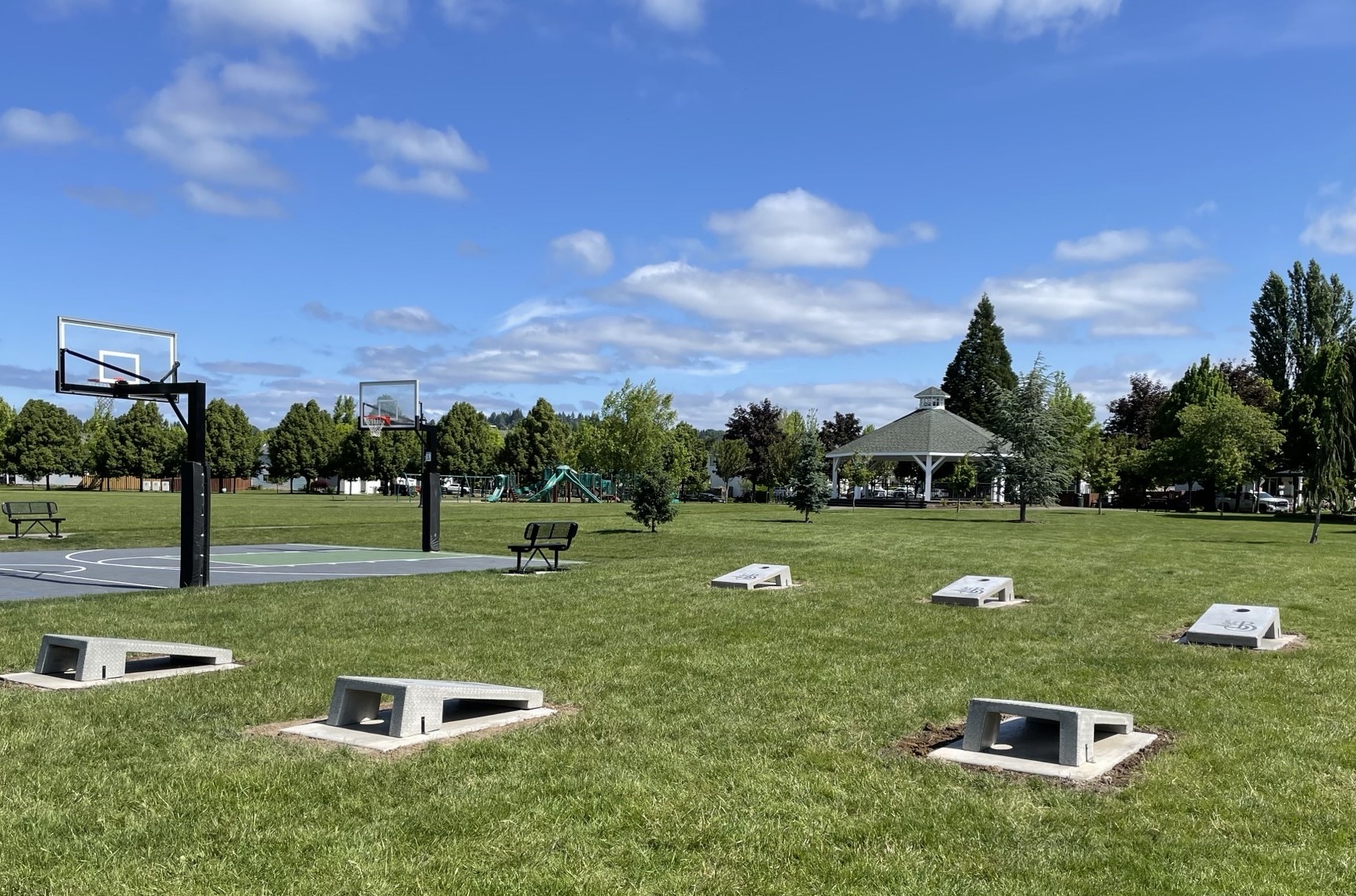
Parks teams are not just buying equipment. They are deciding how to activate civic land with amenities that can survive unsupervised use, changing weather, mixed age groups, and real maintenance budgets. That is why public buyers often move toward permanent amenities like concrete ping pong, cornhole, chess tables, foosball, and shuffleboard.
Planning note: For accessibility routing and site approach requirements, review the official ADA Design Standards during layout planning.
This page is intentionally focused on public parks, park systems, civic plazas, urban play spaces, and recreation departments. That keeps it cleanly separated from the sibling venue pages for apartments and multifamily, schools, colleges, and universities, resorts and hospitality properties, and campgrounds and RV resorts.
Compact installations that create visible activity without overwhelming limited square footage.
One ping pong table plus one to two sets of cornhole boards.
Multi-generational recreation zones that become a dependable gathering point for nearby residents.
Two ping pong tables, cornhole, and one quieter strategy-table area.
Larger game zones that support longer stays, mixed user groups, and stronger destination appeal.
Multiple game types with capacity for groups, tournaments, and all-day use.
The real problem in many parks is not the lack of land. It is the lack of durable activation. Empty grass, passive corners, leftover plaza edges, and underperforming paved areas do not become social infrastructure on their own. Permanent game tables give departments a practical way to turn those spaces into places where people stop, interact, play, and return.
This matters because parks are increasingly asked to do more with less. They need to serve kids, teens, adults, and seniors. They need to support wellness and social connection. They need amenities that still look good after public use, weather, and time. That is exactly where permanent outdoor recreation infrastructure pulls ahead of lightweight alternatives.
Concrete ping pong is usually the first recommendation for public parks because it hits the best mix of visibility, activity, all-age use, and instant understanding. People already know what it is. Spectators gather around it. It brings energy into a public space without requiring a giant footprint or complicated programming.
That does not mean ping pong is the only answer. It means it is often the strongest anchor. Once a park has a ping pong foundation, departments can expand the zone with cornhole, foosball, quieter tables like chess, or specialty pieces such as Connect Four and box hockey.
For a deeper product-level comparison, see Permanent vs Portable Outdoor Ping Pong Tables.
Not every public space needs the same mix. The better approach is to match the game zone to the park’s scale, traffic pattern, and social role in the community.
Small parks and tiny urban recreation areas cannot afford dead square footage. They need one or two strong pieces that create immediate public interest and give people a reason to stop. That is why a single ping pong table or a ping pong-plus-cornhole package often works best in pocket parks.
It creates visible activity without crowding the site. It also gives planners a clean way to activate left-over corners, urban infill parks, and civic plazas that need more than benches to feel alive.
Public parks face a harsher reality than private spaces. Equipment needs to survive constant touch, varying supervision, graffiti attempts, weather extremes, and the simple fact that anything flimsy eventually gets damaged. That is why permanent concrete recreation has a very different role than lightweight recreational gear.
If you want a broader look at how durable outdoor recreation performs, the blog article on high-traffic outdoor tables is worth reading.
| Game type | Best fit in parks | Why it performs well |
|---|---|---|
| Table tennis | All-age activity zones | High visibility, strong social energy, easy to start |
| Cornhole | Family and casual gathering areas | Accessible, familiar, tournament-friendly |
| Foosball | Teen and team-oriented recreation | Fast play and strong spectator interest |
| Chess and backgammon | Quiet zones and seating areas | Conversation-friendly and naturally multi-generational |
| Shuffleboard | Senior-friendly and low-impact zones | Strong for slower social recreation |
| Connect Four / Box Hockey | Signature family attractions | Visual novelty and cross-generational interaction |
Useful next pages: Connect Four, Box Hockey, Shuffleboard, and Chess Tables.
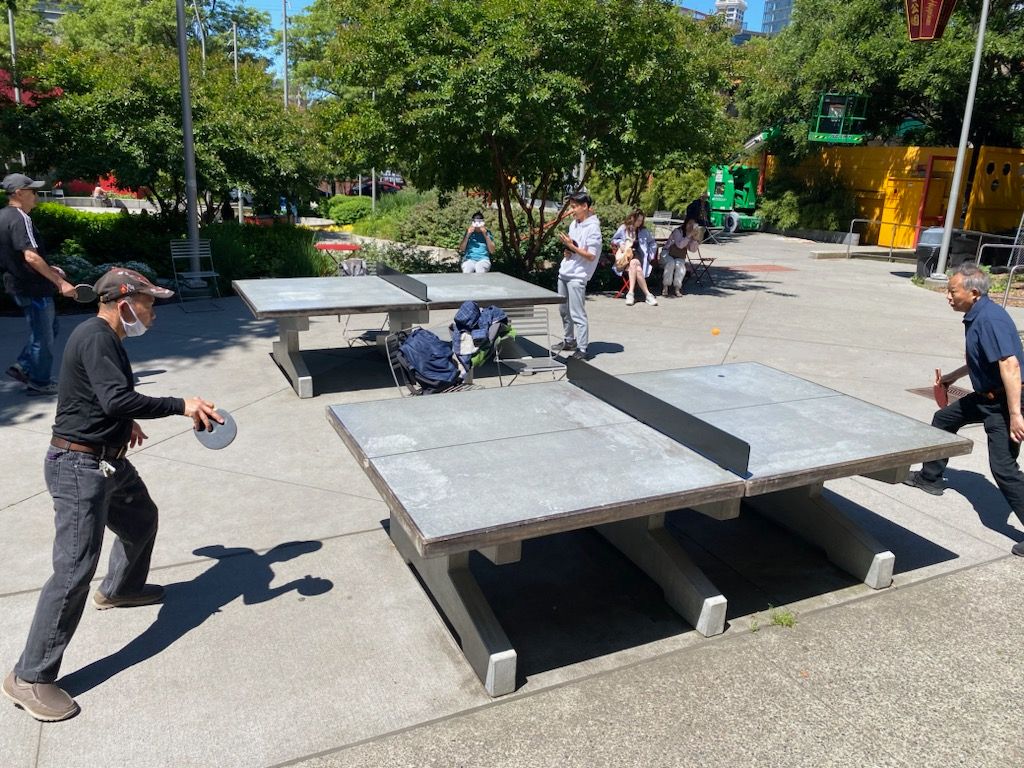
One of the strongest use cases for permanent public game tables is urban revitalization. In civic plazas and downtown parks, permanent recreation can help reframe a space from passive or troubled to active and social. That is part of what makes visible play infrastructure so valuable in public design. It is not just an amenity. It changes how the place feels and how people behave within it.
That is why this page pairs well with the blog content on placemaking with play and how outdoor play builds stronger communities.
Parks departments do not have to settle for generic installations. Custom details can reflect local history, civic symbolism, wildlife, neighborhood identity, or the design language of a larger park improvement project. This matters because the best public amenities do not feel imported. They feel like they belong there.
That kind of customization is especially powerful in downtown plazas, signature park renovations, and donor-supported civic projects where the goal is not just recreation, but memory, identity, and pride of place.
Departments comparing public-use recreation options should stop looking only at initial purchase price. The better comparison is true cost of ownership over time. Portable and lighter products often create hidden costs through replacement, storage, damaged components, staff attention, and vandal-related loss. Permanent public-use tables change that equation by reducing the number of recurring headaches built into ownership.
| Comparison area | Portable or light equipment | Permanent concrete game tables |
|---|---|---|
| Public-use lifespan | Often shorter and more vulnerable to repeated damage | Designed for long service life in outdoor public settings |
| Operational burden | Higher likelihood of storage, replacement, and repairs | Lower ongoing maintenance burden |
| Theft and relocation risk | Higher | Reduced through heavy permanent construction |
| Capital-improvement logic | Weaker long-term justification | Stronger fit for durable public infrastructure thinking |
Public buyers and nonprofit park partners often need amenities that can be defended as durable public investment, not temporary recreation fluff. Permanent outdoor game tables are easier to frame that way because they support broad community use, offer long service life, and help activate existing public land without requiring massive site redevelopment.
These installations are straightforward when departments plan the pad, spacing, and circulation correctly. Site selection matters. Public recreation works best where it is visible, approachable, and integrated into how people already move through the park.
Once you narrow the direction, use Specifications & Technical Downloads and then move to Contact Us or Schedule a Call.
For product-level browsing, the most relevant next links are Concrete Ping Pong, Cornhole, Foosball, Chess Tables, and the Public Use Shop.
This venue page should function as the parks-specific child page inside the venue hub cluster. It should push visitors into product pages, planning resources, and conversion pages without crossing into the distinct search intents of the other venue children.
The strongest in-site paths from here are to the venue hub, technical downloads, featured projects, the blog, and then to the product pages that match the park’s intended game mix.
These are the practical questions parks and recreation teams usually ask before moving forward.
The best mix usually starts with concrete ping pong because it has broad public appeal, then expands with cornhole, chess tables, foosball, or shuffleboard depending on the park’s audience and scale.
Permanent game tables reduce theft risk, lower maintenance burden, eliminate storage issues, and typically deliver better long-term value in public spaces that see regular unsupervised use.
A strong neighborhood park setup often includes two ping pong tables, several cornhole sets, and one or two strategy tables so the space can serve families, teens, adults, and seniors at the same time.
Yes. Permanent recreation tables are one of the clearest ways to turn passive corners, empty lawns, and underperforming paved areas into visible community gathering spaces.
Go to Specifications & Technical Downloads for planning support, then use Contact Us or Schedule a Call to discuss site fit and product selection.
These are the strongest next-step links for parks and recreation buyers moving from venue research into product evaluation and project planning.
outdoor concrete games for parks and recreation give departments a permanent way to activate public space with amenities that are built for weather, vandal resistance, low upkeep, and multi-generational use. From neighborhood parks to high-traffic regional destinations, Stone Age Concrete Games helps public agencies create recreation areas that stay attractive and functional for decades. Start here, explore the broader Outdoor Game Tables by Venue hub, browse the full Outdoor Concrete Games catalog, or head back to the homepage to view the complete brand experience.
This page is built specifically for parks and recreation departments, municipal planners, landscape architects, civic improvement teams, and nonprofit park partners who need long-life public-use amenities that do more than sit there. The goal is simple: create durable recreation infrastructure that increases dwell time, strengthens community use, and avoids the replacement cycle that kills long-term value.
Parks teams are not just buying equipment. They are deciding how to activate civic land with amenities that can survive unsupervised use, changing weather, mixed age groups, and real maintenance budgets. That is why public buyers often move toward permanent amenities like concrete ping pong, cornhole, chess tables, foosball, and shuffleboard.
Planning note: For accessibility routing and site approach requirements, review the official ADA Design Standards during layout planning.
This page is intentionally focused on public parks, park systems, civic plazas, urban play spaces, and recreation departments. That keeps it cleanly separated from the sibling venue pages for apartments and multifamily, schools, colleges, and universities, resorts and hospitality properties, and campgrounds and RV resorts.
Compact installations that create visible activity without overwhelming limited square footage.
One ping pong table plus one to two sets of cornhole boards.
Multi-generational recreation zones that become a dependable gathering point for nearby residents.
Two ping pong tables, cornhole, and one quieter strategy-table area.
Larger game zones that support longer stays, mixed user groups, and stronger destination appeal.
Multiple game types with capacity for groups, tournaments, and all-day use.
The real problem in many parks is not the lack of land. It is the lack of durable activation. Empty grass, passive corners, leftover plaza edges, and underperforming paved areas do not become social infrastructure on their own. Permanent game tables give departments a practical way to turn those spaces into places where people stop, interact, play, and return.
This matters because parks are increasingly asked to do more with less. They need to serve kids, teens, adults, and seniors. They need to support wellness and social connection. They need amenities that still look good after public use, weather, and time. That is exactly where permanent outdoor recreation infrastructure pulls ahead of lightweight alternatives.
Concrete ping pong is usually the first recommendation for public parks because it hits the best mix of visibility, activity, all-age use, and instant understanding. People already know what it is. Spectators gather around it. It brings energy into a public space without requiring a giant footprint or complicated programming.
That does not mean ping pong is the only answer. It means it is often the strongest anchor. Once a park has a ping pong foundation, departments can expand the zone with cornhole, foosball, quieter tables like chess, or specialty pieces such as Connect Four and box hockey.
For a deeper product-level comparison, see Permanent vs Portable Outdoor Ping Pong Tables.
Not every public space needs the same mix. The better approach is to match the game zone to the park’s scale, traffic pattern, and social role in the community.
Small parks and tiny urban recreation areas cannot afford dead square footage. They need one or two strong pieces that create immediate public interest and give people a reason to stop. That is why a single ping pong table or a ping pong-plus-cornhole package often works best in pocket parks.
It creates visible activity without crowding the site. It also gives planners a clean way to activate left-over corners, urban infill parks, and civic plazas that need more than benches to feel alive.
Public parks face a harsher reality than private spaces. Equipment needs to survive constant touch, varying supervision, graffiti attempts, weather extremes, and the simple fact that anything flimsy eventually gets damaged. That is why permanent concrete recreation has a very different role than lightweight recreational gear.
If you want a broader look at how durable outdoor recreation performs, the blog article on high-traffic outdoor tables is worth reading.
| Game type | Best fit in parks | Why it performs well |
|---|---|---|
| Table tennis | All-age activity zones | High visibility, strong social energy, easy to start |
| Cornhole | Family and casual gathering areas | Accessible, familiar, tournament-friendly |
| Foosball | Teen and team-oriented recreation | Fast play and strong spectator interest |
| Chess and backgammon | Quiet zones and seating areas | Conversation-friendly and naturally multi-generational |
| Shuffleboard | Senior-friendly and low-impact zones | Strong for slower social recreation |
| Connect Four / Box Hockey | Signature family attractions | Visual novelty and cross-generational interaction |
Useful next pages: Connect Four, Box Hockey, Shuffleboard, and Chess Tables.
One of the strongest use cases for permanent public game tables is urban revitalization. In civic plazas and downtown parks, permanent recreation can help reframe a space from passive or troubled to active and social. That is part of what makes visible play infrastructure so valuable in public design. It is not just an amenity. It changes how the place feels and how people behave within it.
That is why this page pairs well with the blog content on placemaking with play and how outdoor play builds stronger communities.
Parks departments do not have to settle for generic installations. Custom details can reflect local history, civic symbolism, wildlife, neighborhood identity, or the design language of a larger park improvement project. This matters because the best public amenities do not feel imported. They feel like they belong there.
That kind of customization is especially powerful in downtown plazas, signature park renovations, and donor-supported civic projects where the goal is not just recreation, but memory, identity, and pride of place.
Departments comparing public-use recreation options should stop looking only at initial purchase price. The better comparison is true cost of ownership over time. Portable and lighter products often create hidden costs through replacement, storage, damaged components, staff attention, and vandal-related loss. Permanent public-use tables change that equation by reducing the number of recurring headaches built into ownership.
| Comparison area | Portable or light equipment | Permanent concrete game tables |
|---|---|---|
| Public-use lifespan | Often shorter and more vulnerable to repeated damage | Designed for long service life in outdoor public settings |
| Operational burden | Higher likelihood of storage, replacement, and repairs | Lower ongoing maintenance burden |
| Theft and relocation risk | Higher | Reduced through heavy permanent construction |
| Capital-improvement logic | Weaker long-term justification | Stronger fit for durable public infrastructure thinking |
Public buyers and nonprofit park partners often need amenities that can be defended as durable public investment, not temporary recreation fluff. Permanent outdoor game tables are easier to frame that way because they support broad community use, offer long service life, and help activate existing public land without requiring massive site redevelopment.
These installations are straightforward when departments plan the pad, spacing, and circulation correctly. Site selection matters. Public recreation works best where it is visible, approachable, and integrated into how people already move through the park.
Once you narrow the direction, use Specifications & Technical Downloads and then move to Contact Us or Schedule a Call.
For product-level browsing, the most relevant next links are Concrete Ping Pong, Cornhole, Foosball, Chess Tables, and the Public Use Shop.
This venue page should function as the parks-specific child page inside the venue hub cluster. It should push visitors into product pages, planning resources, and conversion pages without crossing into the distinct search intents of the other venue children.
The strongest in-site paths from here are to the venue hub, technical downloads, featured projects, the blog, and then to the product pages that match the park’s intended game mix.
These are the practical questions parks and recreation teams usually ask before moving forward.
The best mix usually starts with concrete ping pong because it has broad public appeal, then expands with cornhole, chess tables, foosball, or shuffleboard depending on the park’s audience and scale.
Permanent game tables reduce theft risk, lower maintenance burden, eliminate storage issues, and typically deliver better long-term value in public spaces that see regular unsupervised use.
A strong neighborhood park setup often includes two ping pong tables, several cornhole sets, and one or two strategy tables so the space can serve families, teens, adults, and seniors at the same time.
Yes. Permanent recreation tables are one of the clearest ways to turn passive corners, empty lawns, and underperforming paved areas into visible community gathering spaces.
Go to Specifications & Technical Downloads for planning support, then use Contact Us or Schedule a Call to discuss site fit and product selection.
These are the strongest next-step links for parks and recreation buyers moving from venue research into product evaluation and project planning.