2026 State of the Industry: Why Permanent Play Is Becoming Essential
Concrete Games as the Modern Campfire
Long before cities, zoning codes, or recreation departments, people gathered around a fire.
The campfire was not an amenity. It was the center.
A place to warm hands, tell stories, test skill, laugh, argue, reconcile, and belong.
In many ways, the games we build today serve the same purpose.
A concrete ping pong table in a park.
A chess board in a plaza.
Cornhole boards near a brewery.
A foosball table tucked into a courtyard.
These are modern campfires. Places where people naturally gather. Where play lowers barriers. Where community forms without instruction.
As we enter 2026, that truth feels more relevant than ever.
The State of the Industry Going Into 2026
Across parks, resorts, multifamily developments, schools, and public spaces, one thing is clear: the demand for durable, permanent play is rising.
We’re seeing:
- Heavier overall project workloads
- Longer production and construction timelines
- More thoughtful planning earlier in the design process
- A growing preference for installations that last rather than rotate
The era of disposable recreation is fading. In its place is a more grounded question:
What can we build once and rely on for decades?
Concrete games answer that question.
Why Planning and Ordering Ahead Matters More Than Ever
As we move into 2026, lead times matter more than they did even a few years ago. Manufacturing schedules are full. Contractors are booked. Freight, installation coordination, and site readiness all require foresight.
The most successful projects we see share a few traits:
- Games are specified early in the design phase
- Space planning considers circulation, sightlines, and gathering areas
- Orders are placed with enough runway to avoid compromises
Planning ahead doesn’t just reduce stress. It produces better outcomes—better placement, better integration, and better long-term use.
Permanent play works best when it’s treated as essential infrastructure, not an afterthought.
The Big Four: The Games That Anchor Community Spaces
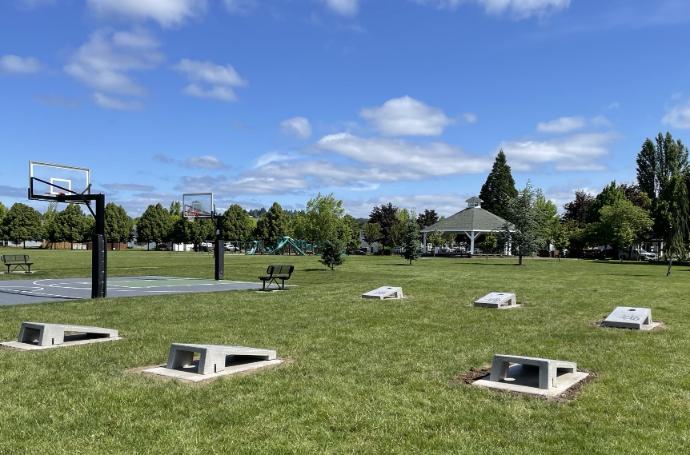
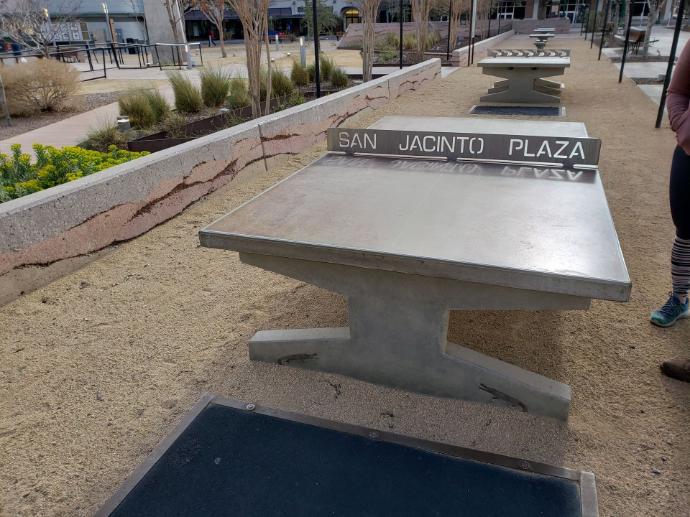

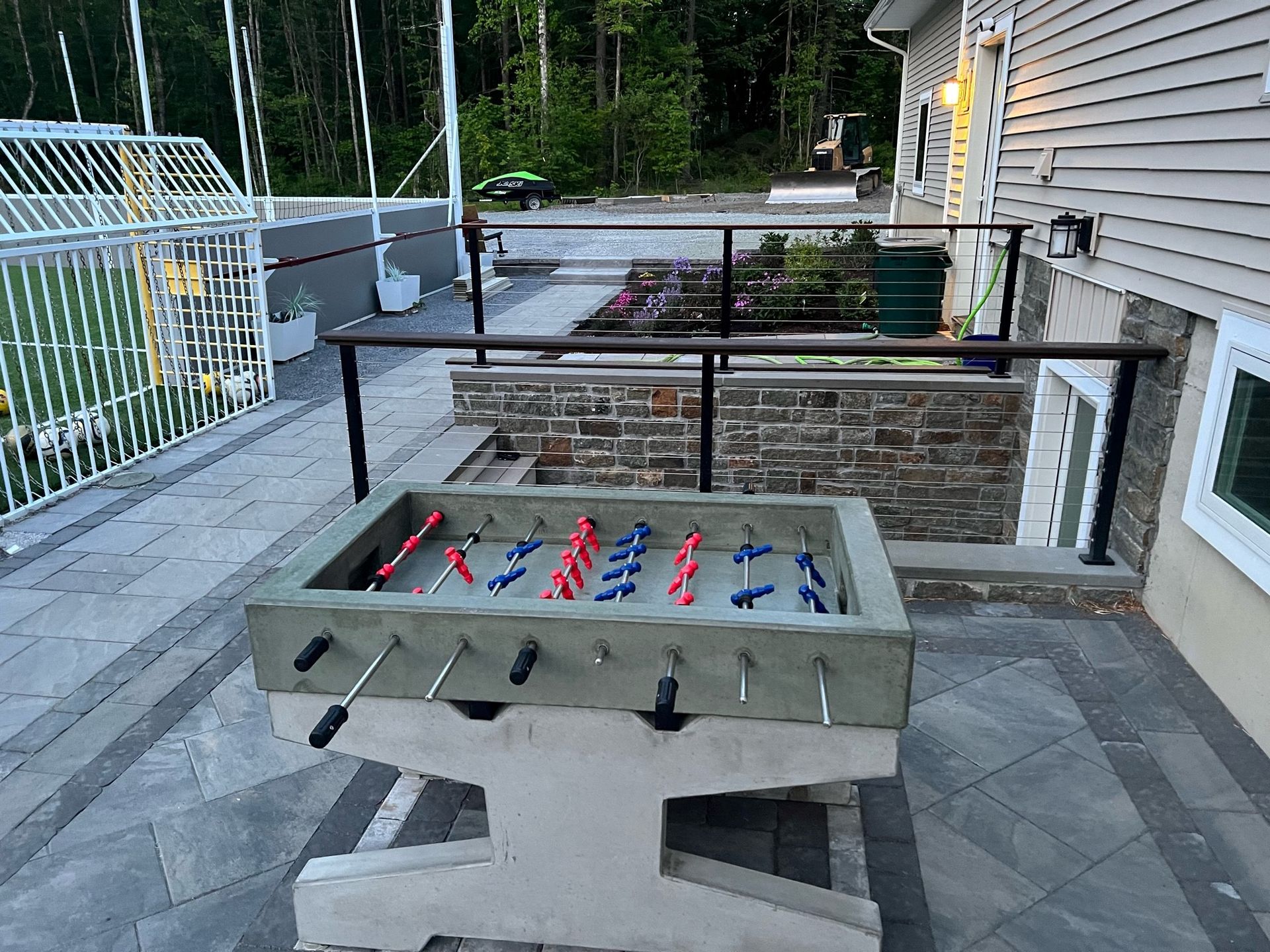
While trends come and go, four games continue to prove themselves across cultures, climates, and generations. We see them succeed again and again because each serves a different social role—together forming a complete ecosystem of play.
Concrete Cornhole
Simple. Social. Instantly approachable.
Cornhole draws people in without intimidation. It’s often the first game someone plays and the last one they walk away from. It works for all ages and abilities and thrives in casual, social environments.
Concrete Chess
Quiet, strategic, and deeply human.
Chess slows a space down in the best way. It invites thought, conversation, and intergenerational exchange. A concrete chess table often becomes a regular meeting place—players returning week after week.
Concrete Ping Pong
Dynamic, kinetic, magnetic.
Ping pong is having a moment heading into 2026. Part of that rise appears tied to cultural exposure (including upcoming media like Marty Supreme) and part to crossover interest from pickleball and padel players seeking fast, social competition.
A ping pong table doesn’t stay empty for long. It creates energy.
Concrete Foosball
Compact intensity.
Foosball delivers fast-paced play in a small footprint. It excels in courtyards, student housing, resorts, and tight urban spaces where energy matters but square footage is limited.
Together, these four games function like a well-built fire ring—each piece supporting the others, creating balance, warmth, and longevity.
Why Permanent Play Is Winning in 2026
Concrete games aren’t popular because they’re trendy. They’re popular because they solve real problems:
- Minimal maintenance
- Extreme durability
- Resistance to weather, vandalism, and heavy use
- Consistent usability year after year
More importantly, they create places where people choose to stay.
In a time when communities are fragmented and attention is divided, spaces that naturally invite interaction matter more than ever.
Building for Decades, Not Seasons
At Stone Age Concrete Games, we often say we measure success in tons, laughter, and centuries.
That isn’t marketing language. It’s a design philosophy.
As 2026 begins, we see cities, designers, developers, and operators asking better questions:
- How long will this last?
- How will people use it five years from now?
- Will it still matter when the novelty wears off?
Permanent play answers those questions with confidence.
Like the original campfires, these games don’t demand attention. They earn it—over time, through use, through shared experience, through stories told and retold beside them.
That is the state of the industry as we see it heading into 2026.
And it’s a future we’re proud to help build.