Outdoor ping pong tables live very different lives depending on where they are placed. Some are moved seasonally. Some are tucked under patios. Others are bolted into the ground, expected to endure decades of weather, use, and public play.
Understanding the strengths and limitations of each table material is the fastest way to choose the best outdoor ping pong table for your space.
This comparison looks at concrete, aluminum, steel, and wood table tennis tables — not through marketing claims, but through durability, playability, permanence, and long-term value.
A Quick Material Overview
Not all outdoor ping pong tables are designed for the same purpose:
- Aluminum and steel tables excel where permanence is not possible or not desired
- Wood tables remain a viable indoor-only solution
- Concrete ping pong tables dominate where strength, longevity, craftsmanship, and permanent outdoor installation matter
Each material has a place — but they are not interchangeable.
Concrete Ping Pong Tables: Built for Permanence
Concrete outdoor ping pong tables are designed for environments where the table is expected to become part of the landscape.
Why concrete dominates outdoors
Concrete excels in nearly every category that matters for permanent installations:
- Exceptional structural strength
- True weather resistance (sun, rain, freeze, heat)
- Vandal resistance
- Zero warping or flex over time
- Excellent and consistent ball bounce
- Architectural presence and design flexibility
Unlike aluminum or steel tables, concrete tables are not seasonal furniture. They are infrastructure.
This is why concrete tables are used in:
- Parks and plazas
- Universities and schools
- Resorts and campgrounds
- Public redevelopment projects
- High-end residential outdoor spaces
Playability and craftsmanship
Modern concrete table tennis surfaces are engineered for play — not just durability. Properly designed concrete tables deliver:
- Consistent bounce
- Tournament-appropriate dimensions
- Excellent net stability
- Comfortable play across skill levels
Concrete also allows for:
- Integral color
- Polished or honed finishes
- Customization
- Branding and site specific customization
These are design possibilities that lightweight materials simply cannot match.
Warranty and lifecycle value
Concrete tables are measured in decades, not seasons. A 10-year warranty on a concrete ping pong table is rare — and unheard of among portable outdoor tables.
Aluminum Outdoor Ping Pong Tables: Flexible and Seasonal
Aluminum tables are a good solution when outdoor permanence is not possible.
Where aluminum tables make sense
- Homes where tables move indoors seasonally
- Temporary outdoor setups
- Spaces without the ability to anchor or install permanently
- Regular residential use where portability matters
Aluminum tables are:
- Lightweight
- Rust-resistant
- Easy to move and store
They are not designed for:
- Public spaces
- High-use environments
- Long-term outdoor exposure without shelter
For homeowners who need flexibility, aluminum remains a practical choice.
Steel Outdoor Ping Pong Tables: Durable but Limited
Steel tables offer more rigidity than aluminum, but they share many of the same limitations.
Strengths and tradeoffs
Steel outdoor tables:
- Are heavier than aluminum
- Offer decent durability
- Often include protective coatings
However:
- Coatings eventually fail
- Steel is susceptible to corrosion
- Play surfaces can degrade over time
- Long-term maintenance becomes unavoidable
Steel tables work best where
- Budget is constrained
- Installations are semi-permanent
- Long-term aesthetics are not the priority
Wood Ping Pong Tables: Indoor Only
Wood product tables remain the gold standard for indoor table tennis — and it should stay there.
Why wood belongs indoors
Wood tables:
- Deliver excellent indoor play characteristics
- Are sensitive to moisture and temperature
- Warp and delaminate outdoors
- Require climate control
Even “outdoor-rated” wood or composite tops fall short over time when exposed to weather.
Wood is a viable indoor-only product, and a poor long-term outdoor solution.
Concrete Models for Different Outdoor Environments
Concrete does not mean one-size-fits-all. Different spaces benefit from different designs.
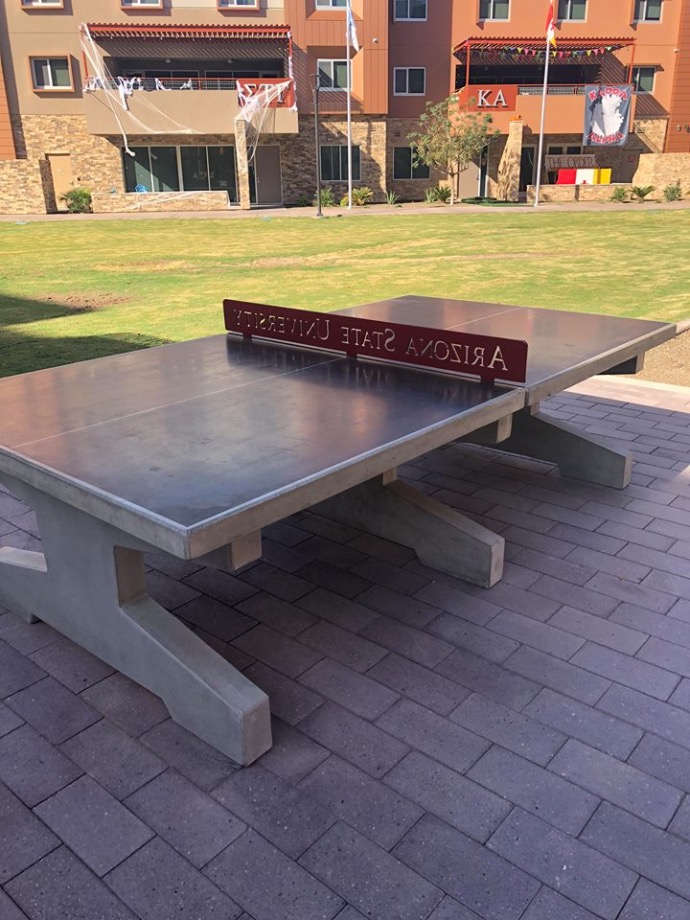
The Uptown Model: The Workhorse
The Uptown concrete ping pong table is the standard for permanent outdoor play.
- Balanced, symmetrical design
- Proven durability
- Excellent play characteristics
- Ideal for parks, schools, campuses, and resorts
This is the table that quietly does its job — year after year.
Cantilever
For designers and architects, and communities form matters as much as function.
- Cantilever Model
- Asymmetrical
- Visually striking
- A favorite among designer-focused projects
- Creates a sense of motion and lightness despite its mass
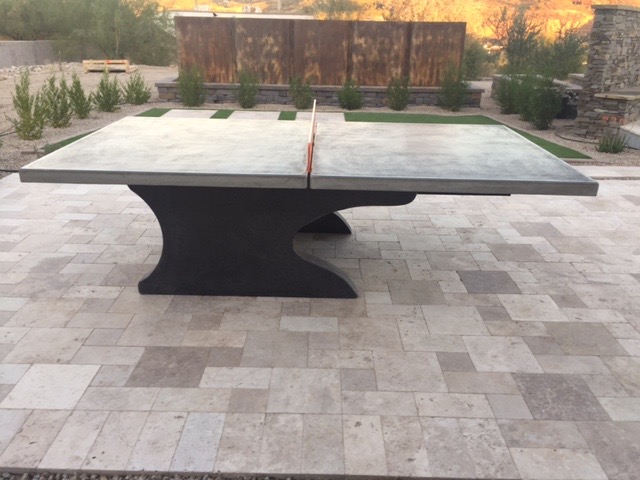 Cantilever Concrete Table Tennis Table on the patio.
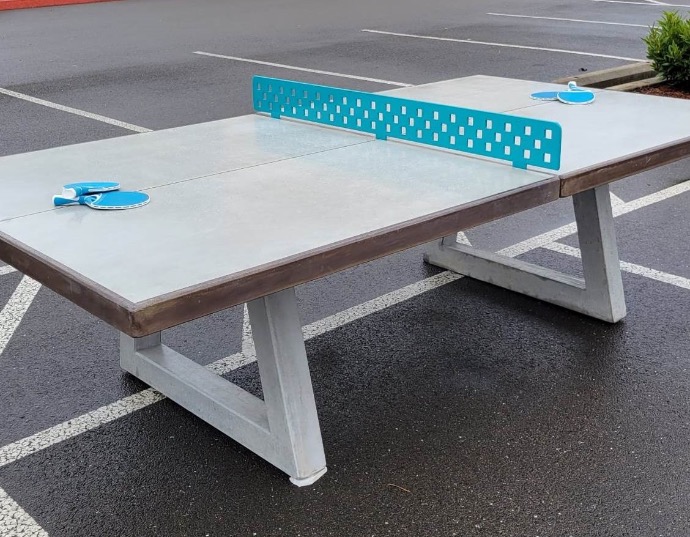
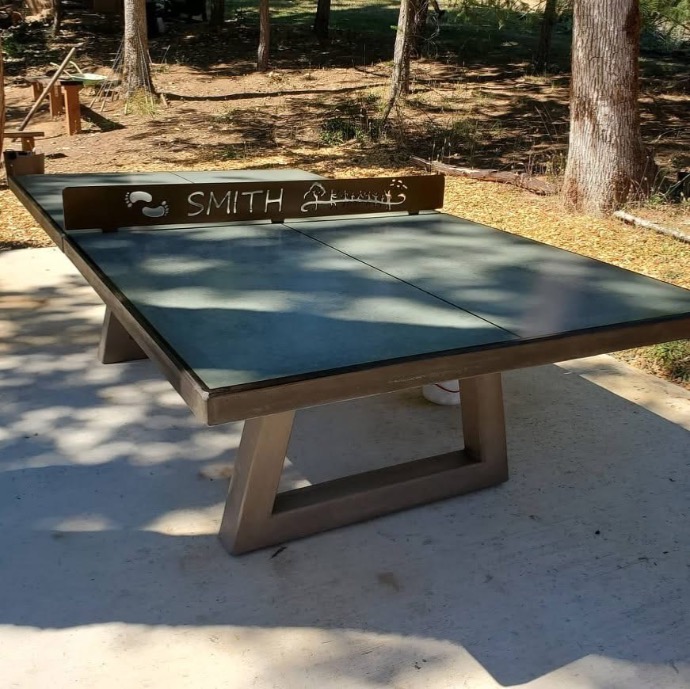
Trapezoid Leg Model
- Trapezoid Leg Model
- Clean geometry
- Modern architectural lines
- Integrates beautifully into contemporary landscapes
These models are often chosen not just as game tables, but as sculptural elements.
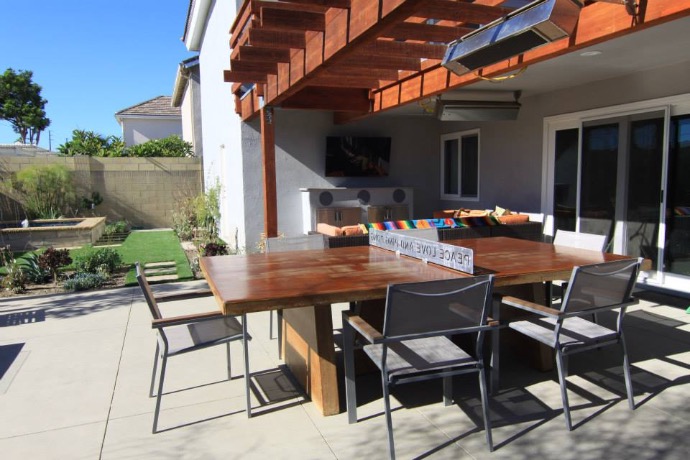

Dining ModelConcrete Ping Pong Tables
Concrete table tennis does not have to end when the game does. Our tables are a statement in concrete and our beautiful finishes make a outstanding dining table!
Concrete Dining Table Line: Designed for Hospitality
The dining tableconcrete ping pong tables are ideal for:
- Restaurants
- Breweries
- Wineries
- Rooftop bars
- Outdoor dining courtyards
- Fine home outdoor entertainment areas such as patios, poolside and outdoor kitchens
These tables are designed with:
- Increased legroom
- Comfortable seating clearance
- Proportions that work equally well for play and dining
Some dining models can comfortably seat up to 12 people for dinner.
Available dining styles
- Tuscan (curved legs) – warm, classic, and inviting
- Trapezoid dining legs – structuraland architectural
- Modern dining legs – clean, minimalist, and contemporary
These designs allow ping pong tables to function as true gathering tables, not just games.
High-End Residential & Outdoor Entertainment Spaces
Concrete ping pong tables are an excellent fit for:
- Luxury homes
- Pool decks
- Outdoor kitchens
- Tennis and pickleball court areas
- High-end entertainment patios
For these homes, concrete is chosen not out of necessity — but preference:
- Durability
- Style
- Permanence
- Craftsmanship
- Custom elements or custom design
Concrete tables are for homeowners who:
- Value materials that age well
- Appreciate design
- Love ping pong enough to make it permanent
Some homeowners and Airbnb owners also choose Uptown models for outdoor game areas that must withstand constant use.
Homes That Need Flexibility
For regular homes where:
- Tables move indoors seasonally
- Space changes frequently
- Permanence is not desired
High-quality aluminum or steel indoor/outdoor tables remain the best option.
Concrete is intentionally exclusive in this context — chosen when permanence and material presence matter more than portability.
The Bottom Line: Choosing the Best Outdoor Ping Pong Table
- Concrete dominates where permanence, strength, craftsmanship, style, and longevity matter
- Aluminum and steel excel when flexibility and seasonal use are required
- Wood remains an indoor-only solution
For public spaces, hospitality environments, high-end outdoor living, and long-term installations, concrete outdoor ping pong tables stand alone.
They are not furniture.
They are part of the place.